
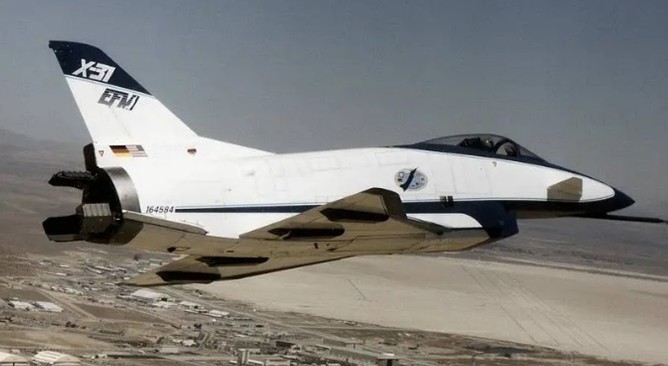
1993: The Rockwell X-31A EFM Demonstrator made the first high-angle-of-attack, post-stall, 180-degree turn known as the Herbst Maneuver. The aircraft made the turn in a 475-foot radius. Two X-31 Enhanced Fighter Maneuverability demonstrators were test-flown during the early 1990s at NASA’s Dryden Flight Research Center, Edwards, CA, to obtain data on control in the post-stall flight regime. The X-31 program demonstrated the value of thrust vectoring – directing engine exhaust flow – coupled with advanced flight control systems, to provide controlled flight at very high angles of attack.